Learn Documentary With Filmmaker and The Real News Network Contributor Ross Domoney
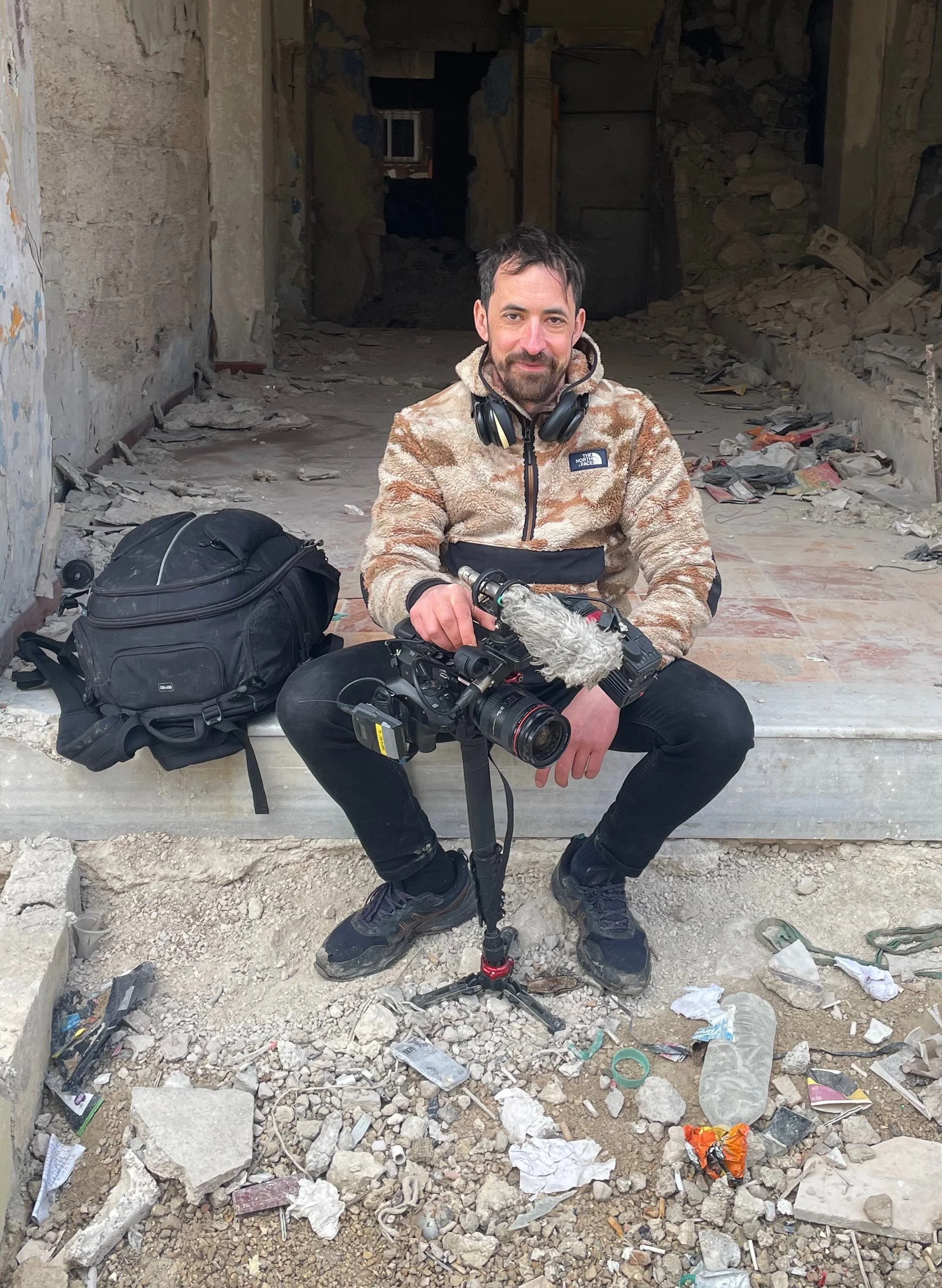
A new practical online course from independent filmmaker and journalist Ross Domoney explores how powerful documentaries can be made with small crews and limited budgets. It examines how filmmaking can move beyond headlines to engage with the contradictions, complexities and lived experiences behind major political events.
You can find out more about the course here.
For more than twenty years, Ross has used film to document political struggles, social movements and communities often overlooked by mainstream media. Over the past five years, he has contributed films and reports to The Real News Network, covering stories from Palestine, Lebanon, Syria and beyond.
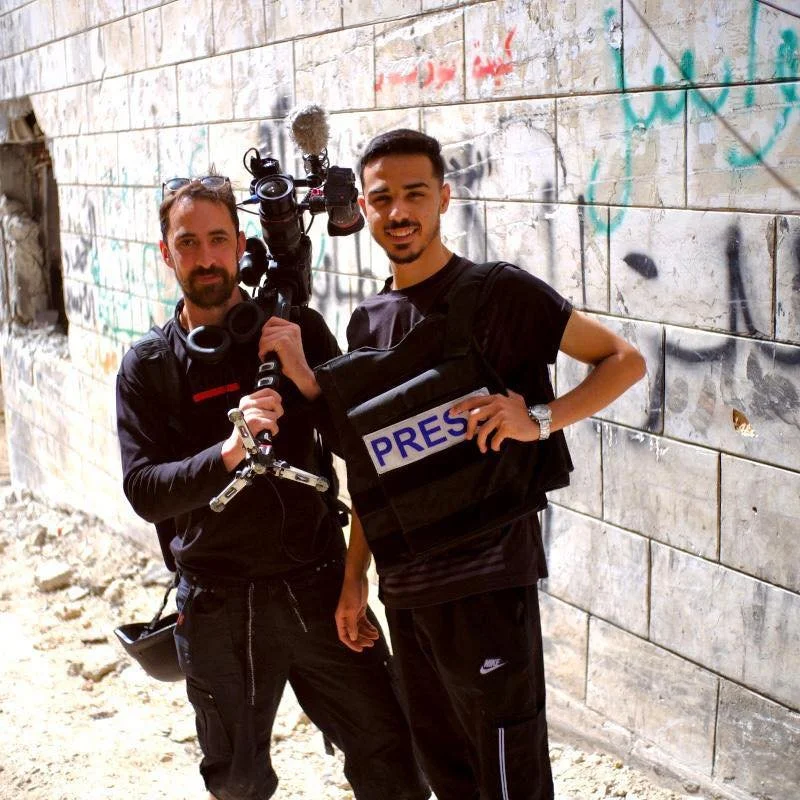
Ross and his crew documented the struggle of resistance fighters in Nur Shams refugee camp in occupied Palestine.
His work has taken him into environments where access is difficult, and events unfold rapidly. For Ross, documentary filmmaking brings together two ways of understanding contemporary politics: the ideas, histories, and analysis we absorb through reading, and the lived experience of encountering those realities through filmmaking.
Now, Ross is sharing the approach he has developed through decades of independent filmmaking in Documentary as Discovery—a practical online course and mentorship programme for activists, journalists, and emerging filmmakers who want to learn how to create meaningful documentaries.
The course is available in two tiers. The first is a self-paced practical filmmaking course, taking participants through the full documentary process, from developing an idea and researching a story through filming, editing and completing a final film. The second combines the course with personalised mentorship, where Ross works directly with participants through one-to-one sessions as they develop their own documentary project from concept to final cut.
Designed for people making their first documentary, filmmakers looking to deepen their skills, and activists wanting to document struggles within their communities, the programme focuses on documentary as both a craft and a way of seeing the world.
At its core is a simple belief: you don't need expensive equipment or a huge crew to make powerful films.
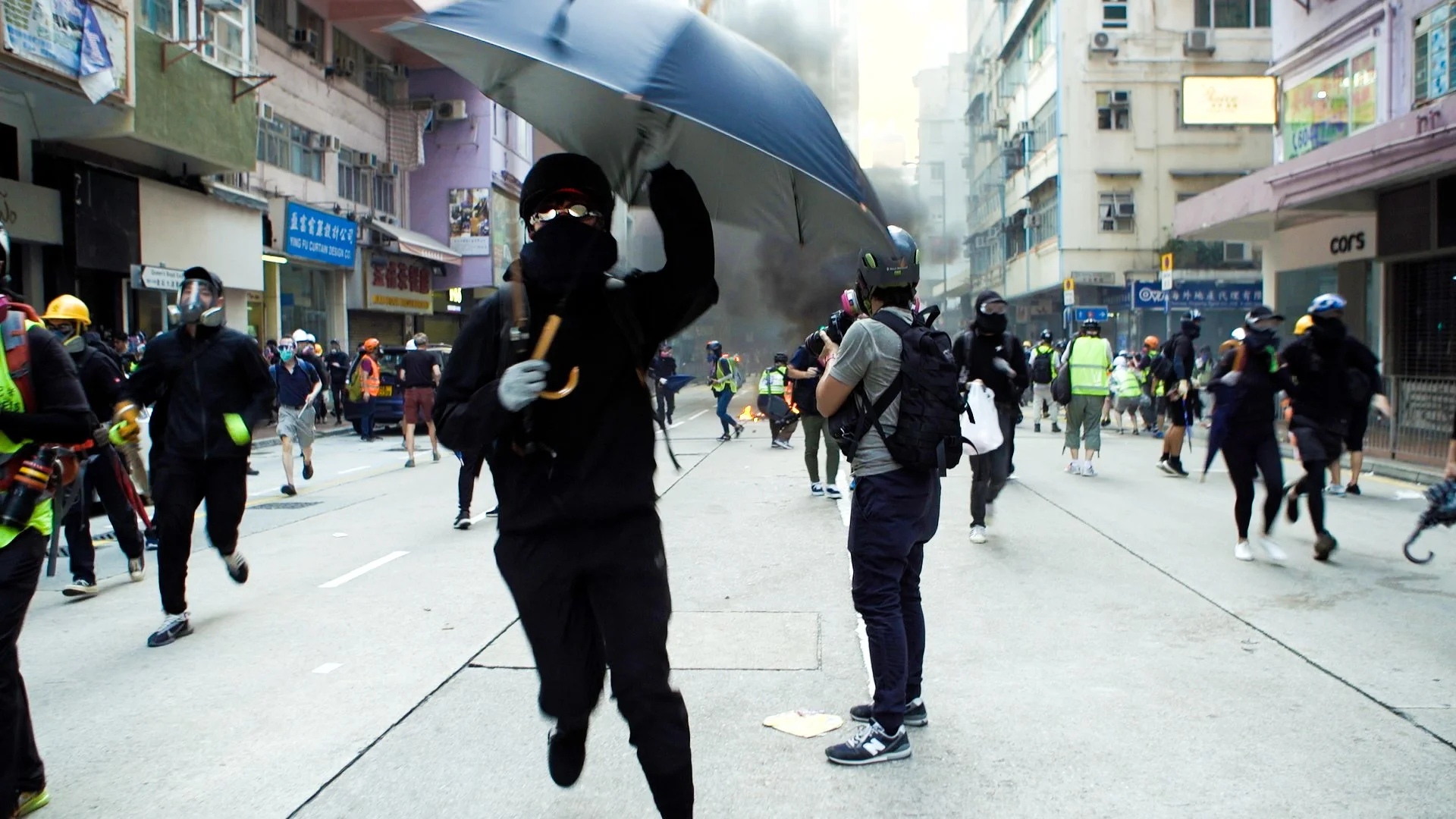
Filming the frontline struggle of protesters in Hong Kong
We spoke to Ross about how documentary filmmaking can transform the way we understand politics, people and the world around us.
What was it like filming for The Real News Network in Al Yarmouk refugee camp in Damascus, Syria?
Ross Domoney: We entered Syria shortly after the fall of Bashar al-Assad’s regime, at a moment when thousands of displaced Syrians were beginning to return to their homes after years of war. Al Yarmouk was a place I had read about for years. Before the war, it was home to one of the largest Palestinian refugee communities outside Palestine, with around 500,000 people living there. In many ways, it was a city within the city of Damascus.
When I arrived and met with a small group of writers, journalists and residents from the camp, I immediately realised how much I still had to learn. They were referencing Palestinian poets, writers and histories that I had never encountered before. The experience forced me to return to my laptop, deepen my research and expand my understanding of the cultural and political history of the place we were documenting.
This is an important part of the filmmaking process: staying open-minded and absorbing as much information as possible, so that you can remain flexible as the film develops and takes on its own unique shape. In fact, when you are filming something so distant from your own environment, there is something quite liberating about accepting that you know very little. It allows you to approach the experience with curiosity rather than rigid assumptions.
Every night, there was the sound of gunfire and explosions in the distance. It was difficult to know whether it was celebration or something else. Against this backdrop, we began filming and hearing the extraordinary stories of survival, resistance and resilience from people in the camp. As we listened, we became deeply committed to building a film together that could best reflect the humanity within the stories we were being trusted with.
It was an incredibly collaborative process that would not have been possible without working closely with local fixers and people from the community.
When making independent film productions, if you can demonstrate that you are there to tell people's stories with respect and empathy, you can form an unspoken social contract. People choose to share their experiences because they trust you to represent their struggles with care and responsibility.
A lot of people assume documentary filmmaking requires expensive equipment and large crews. What have you learned from working independently about making powerful films with limited resources?
Ross Domoney: We are living in a golden age for documentary filmmaking and video journalism. Technology has completely changed what is possible for independent filmmakers. Small, affordable cameras can now produce beautiful cinematic images, and you can even create powerful films using nothing more than a smartphone.
For me personally, there is still no greater feeling than having my camera and laptop packed into my rucksack, returning from an intense documentary shoot and knowing that inside that bag are the tools that have captured the memories, experiences and stories of the people I have been filming.
The equipment is only one part of the process. What matters is learning how to develop an idea, research a subject, build relationships with contributors, adapt to the unpredictability of real life, and shape a story through the edit. Those are the skills that turn footage into a documentary.
That's really what this course is about. It takes people through the entire filmmaking process—from finding a story and developing it in pre-production, to filming, editing and ultimately sharing a finished documentary with an audience. The mentorship programme goes a step further, giving participants one-to-one guidance as they make their own film.
You've spent more than twenty years developing your approach to documentary filmmaking. What are the most important lessons you'll be sharing through this course?
Ross Domoney: I want this course to be a springboard for people who want to communicate stories, both within their own communities and beyond them. Documentary filmmaking is an extraordinary, multi-layered art form that brings together image, sound, story and emotion to create something that no other medium quite can.
When a film moves people emotionally, or gives you access to communities and political movements that you would never ordinarily encounter—including those whose views may challenge your own—it opens up entirely new ways of understanding the world.
There is immense joy and infinite possibility in reading history, politics and literature. But when you combine that with the practical experience of documentary filmmaking—using the craft as a way of meeting the people and places you have spent time reading about—that knowledge takes on an entirely different dimension.
That is what this course is really about. Alongside the practical skills of research, filming, editing and storytelling, I hope people discover documentary filmmaking as a lifelong practice of curiosity and discovery—one that will continue to challenge, surprise and expand the way they understand the world.
To learn more about Ross Domoney's documentary filmmaking course and mentorship programme, and to book a free introductory call, visit Shadowgraph.